Digital Twin Biology Integrations
IINTS-AF includes optional biology helpers that connect simulator concepts to public biomedical databases.
These tools are for explanation, research context, and education. They do not replace the deterministic simulator, do not make clinical decisions, and do not provide patient-specific interpretation.
Why This Exists
The SDK uses mathematical diabetes models. Those models contain ideas such as insulin sensitivity, insulin delay, glucagon rescue, muscle glucose uptake, and tissue compartments.
The biology helpers make those ideas easier to inspect:
- protein structure context from AlphaFold
- pathway context from STRING
- public pharmacology context from ChEMBL
- tissue-expression context from GTEx
- variant-summary context from ClinVar
The output is useful for reports, teaching, presentations, and sanity-checking model assumptions.
1. Structural Biology: AlphaFold
The SDK can download public AlphaFold protein predictions and render explanatory protein images. The examples below are generated directly from the bundled AlphaFold DB mmCIF snapshots and coloured by per-residue pLDDT confidence.
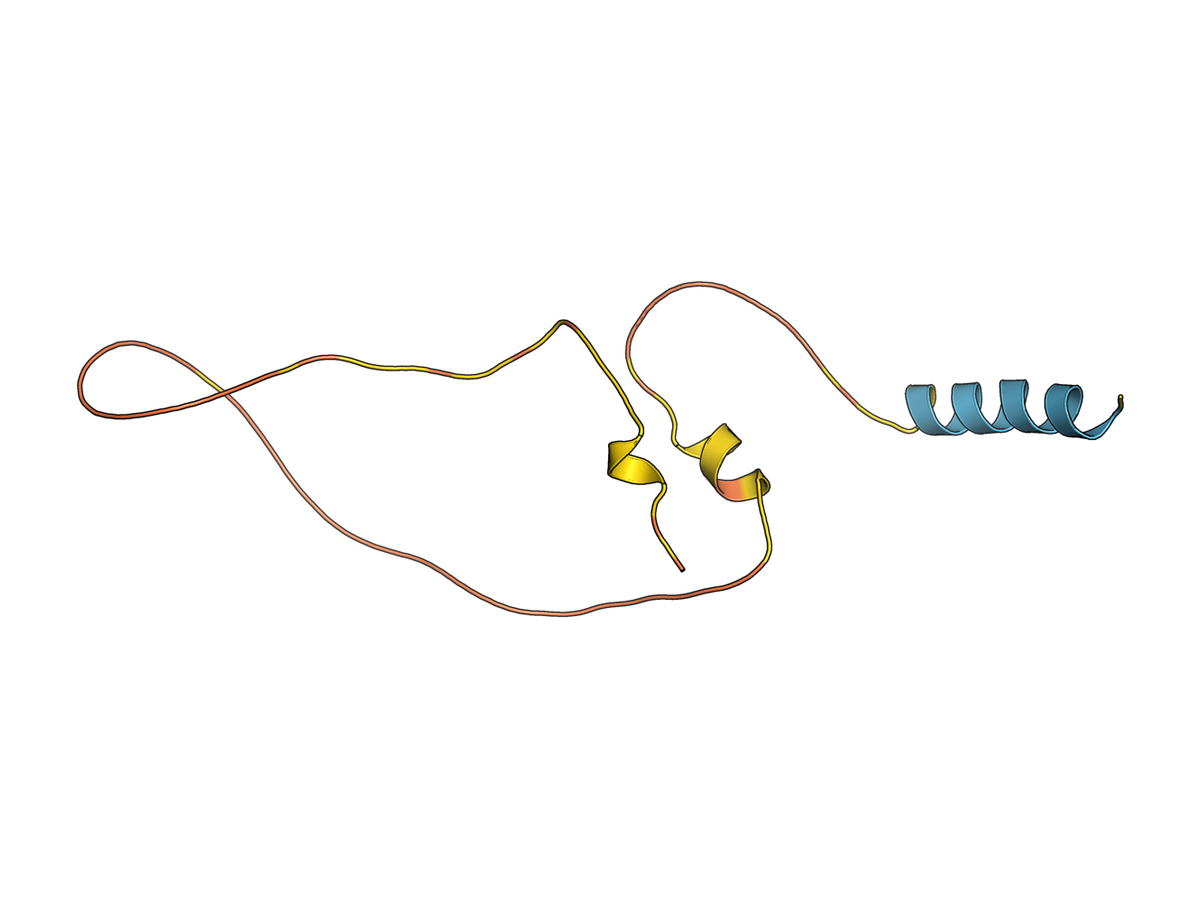
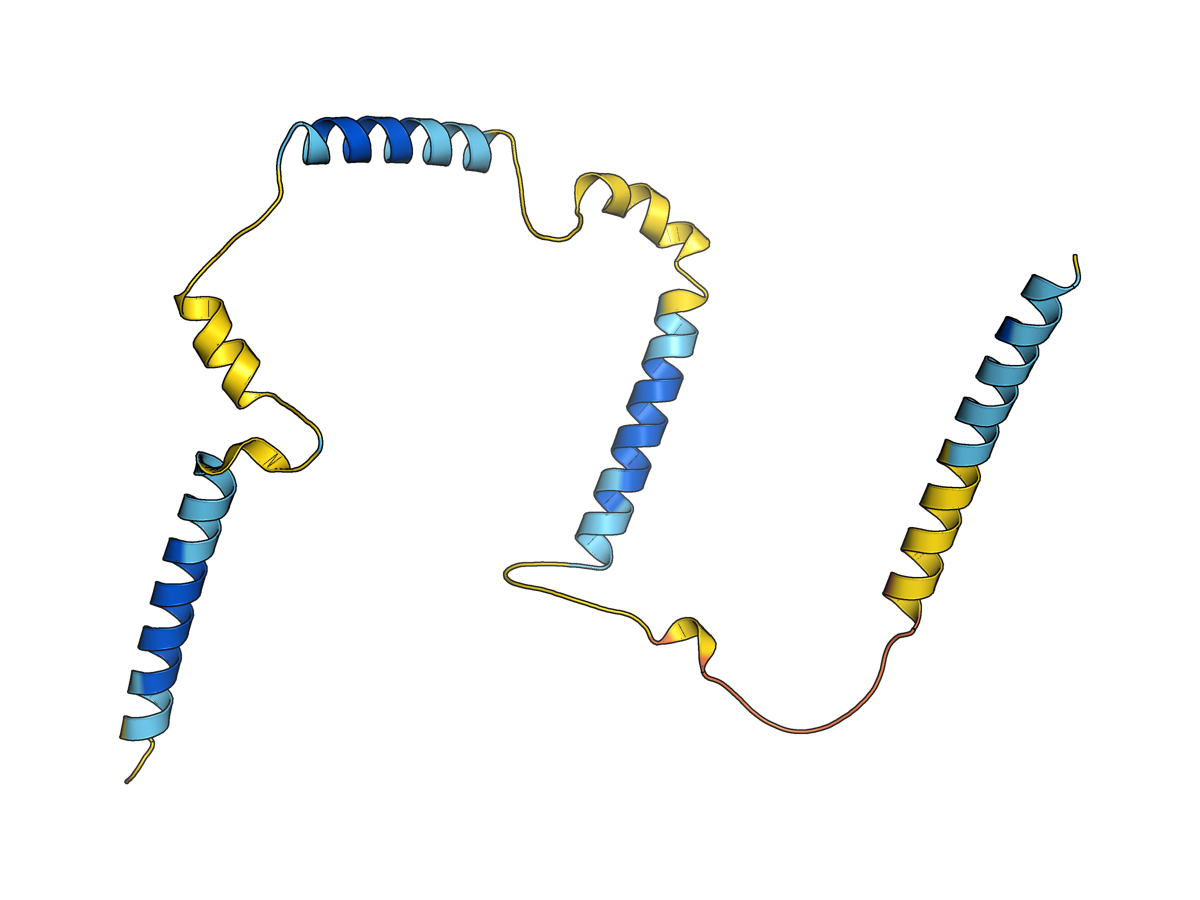
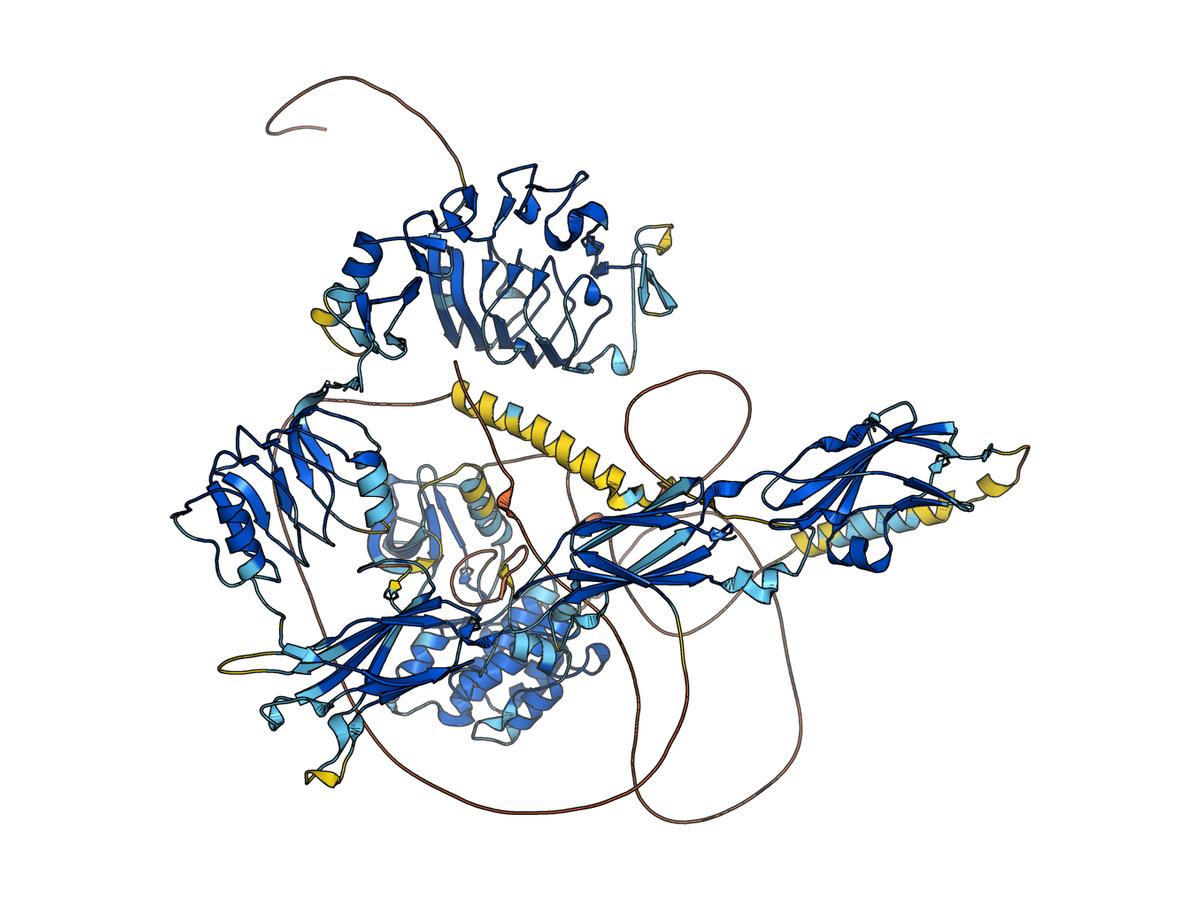
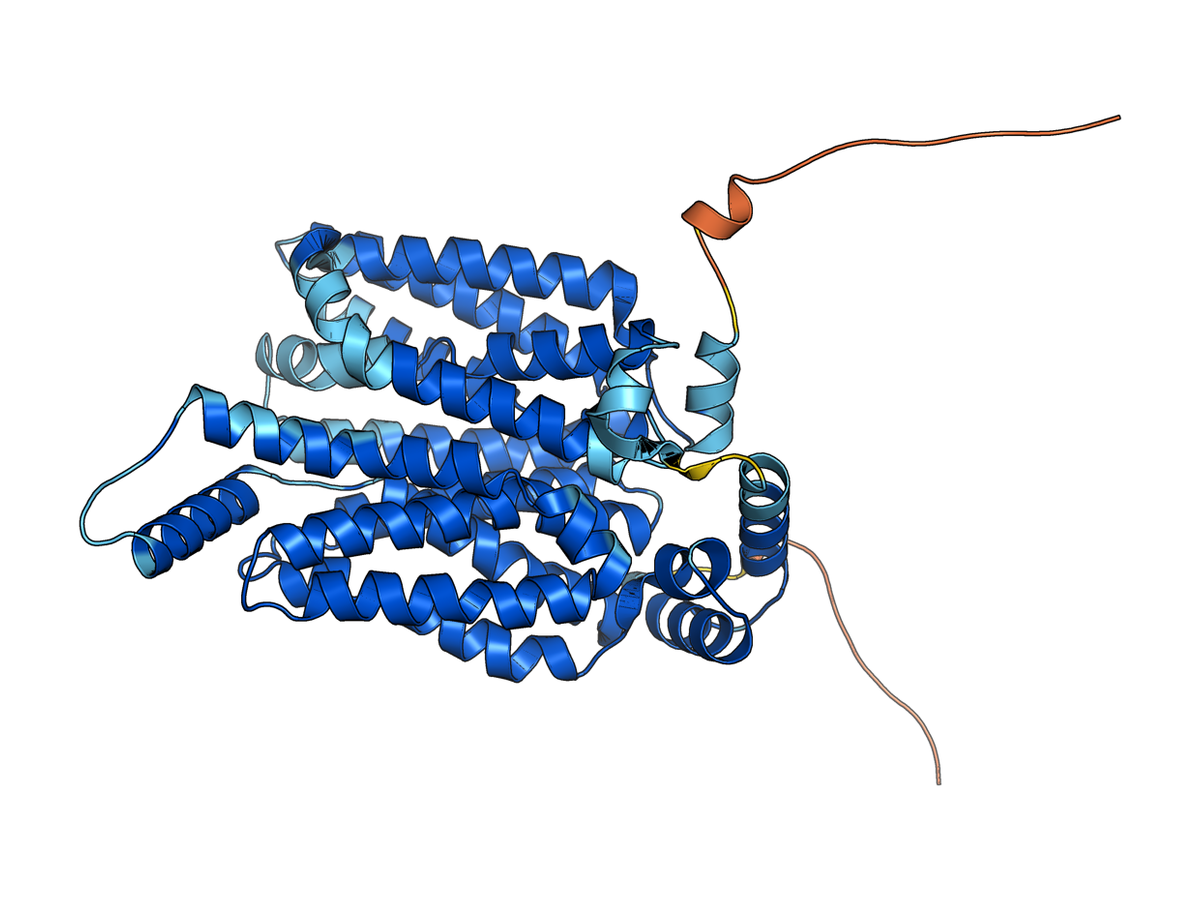
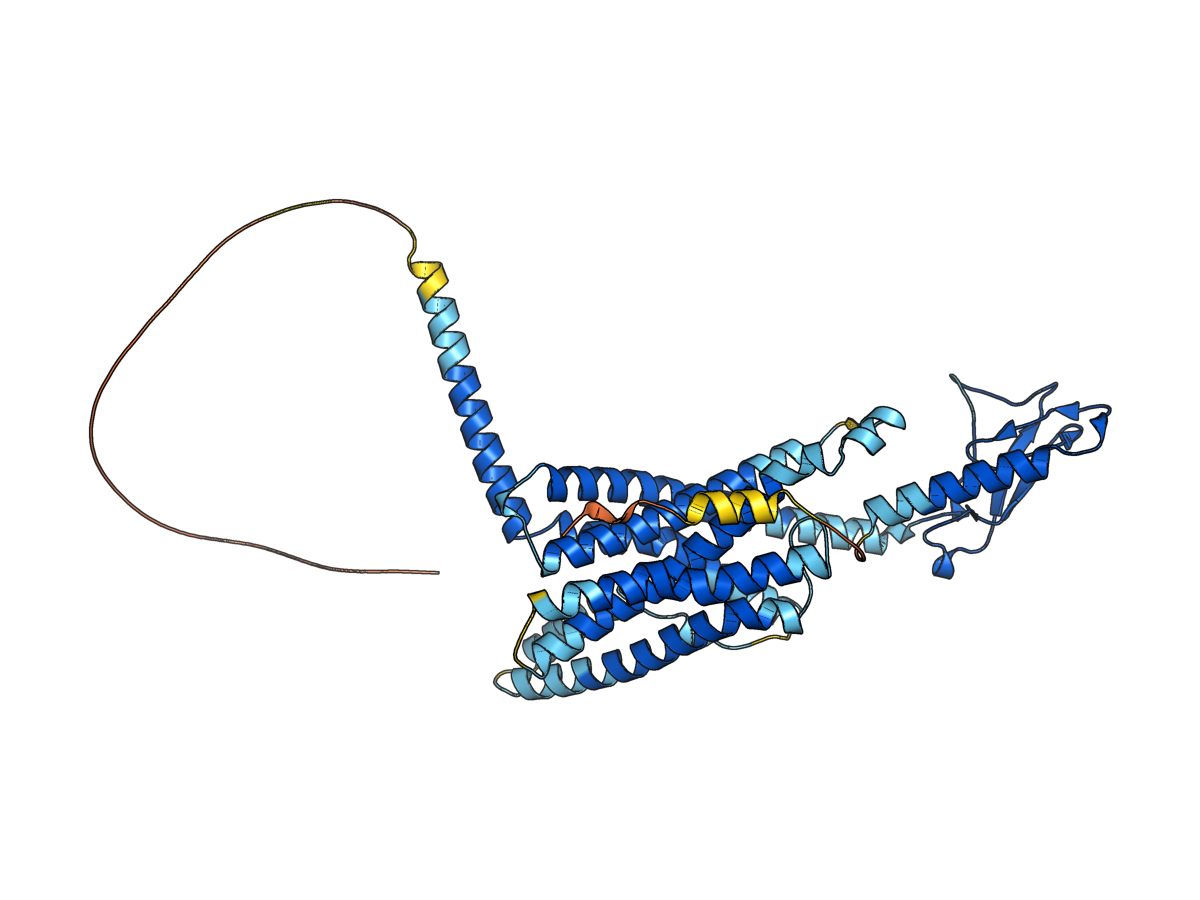
Structure data: AlphaFold Protein Structure Database, data provided by Google DeepMind and EMBL-EBI under CC BY 4.0. IINTS-AF rendered the local mmCIF snapshots with PyMOL; the images are predictions, not experimentally determined structures.
iints render-molecules --target insulin-mutation
Common targets include:
insulin-mutationglucagonglut4insulin-receptorall
The rendered structures are not used by the simulator. They help explain why a model might include delayed insulin action, receptor-level effects, or glucagon rescue.
Read structure confidence separately from physiology
pLDDT describes local confidence in a predicted structure. PAE describes confidence in the relative placement of residues or domains. Neither score measures biological activity, mutation severity, insulin sensitivity, glucose effect, PK/PD, or clinical safety. IINTS-AF never converts these values into a patient parameter or treatment action.
2. PAE Heatmaps
AlphaFold Predicted Aligned Error (PAE) matrices show predicted relative-position uncertainty between residues.
iints render-pae --target all
The SDK writes interactive Plotly HTML files such as:
results/structural/glucagon_pae.html
PAE is structural prediction context only. It is not a glucose metric, dosing metric, safety score, or treatment signal.
3. Physiological Pathways: STRING
The SDK can fetch high-resolution STRING protein-interaction network images for curated diabetes pathways.
iints render-pathways --network insulin-cascade
iints render-pathways --network glucagon-rescue
The pathway images help users understand how insulin signalling, GLUT4 translocation, and glucagon rescue relate to known biological networks.
They do not calibrate simulator equations automatically.
4. Pharmacology Context: ChEMBL
The SDK can look up public ChEMBL molecule records for insulin-related drugs and display the SDK's fixed pharmacokinetic mapping.
iints analyze-insulin --drug lispro
iints analyze-insulin --drug glargine
Important distinction:
- ChEMBL provides public molecule context.
- The SDK absorption values are deterministic model defaults.
- The command does not calculate patient dosing and does not infer treatment advice.
5. Anatomy Context: GTEx
The SDK can render interactive tissue-expression charts from GTEx v8.
iints render-expression --gene GLUT4
GLUT4 is mapped to the official gene symbol SLC2A4. The output helps explain why muscle compartments and exercise-related glucose uptake matter in diabetes simulations.
The chart is not patient calibration.
6. Genetic Variant Context: ClinVar
The SDK can fetch public ClinVar classification context through the MyVariant.info annotation API. The query is bounded to an exact gene symbol and exact protein change; approximate search hits are discarded. The exported context preserves the reported condition, classification, accession, and review status where available.
This is an evidence lookup, not a functional-effect calculator:
- ClinVar classifications are variant-condition classifications and may evolve or conflict.
- MyVariant.info transports aggregated ClinVar annotations; it is not the classification authority.
Pathogenicdoes not mean "20% receptor function" or any other quantitative scalar.Benignand absence from ClinVar do not become patient-model parameters.- AlphaFold pLDDT remains local structure-prediction confidence only.
The multi-scale simulator therefore stays blocked unless a versioned SDK demo assumption or separately reviewed quantitative functional measurement supplies the scalar and provenance. ClinVar and AlphaFold context are still included in the rejection metadata so researchers can see why no simulation was generated.
iints simulate-mutation --gene INSR
iints simulate-mutation --gene INS
Curated mappings create explicitly labelled educational virtual-patient edge cases, such as severe insulin resistance or insulin-deficiency stress tests. They are scenario assumptions, not effect estimates calculated from ClinVar.
They are not diagnostic genetics and should not be interpreted for a real person.
7. From Structure To Measured Chemistry And Dynamics
AlphaFold remains one structural layer. The SDK now keeps three additional reference layers separate:
- BindingDB exports measured
Ki,Kd,IC50, and related assay records without treating them as equivalent. - COPASI inspects and explicitly runs researcher-configured sensitivity or parameter-analysis tasks.
- CellML/OpenCOR validates independent equation models, while FMI/FMPy handles reviewed physical-device models.
iints research binding query --uniprot P06213 --output-dir results/bindingdb
iints research copasi inspect path/to/analysis.cps
iints research cellml validate path/to/model.cellml --output-dir results/cellml
iints research fmi inspect path/to/device_model.fmu
No structure score, assay value, fitted parameter, CellML variable, or FMU output is mapped into the virtual patient automatically. See Cross-scale Reference Labs for execution and security boundaries.
Outputs
Most commands write files under:
results/structural/
Examples:
results/structural/insulin-cascade_string_network.png
results/structural/glucagon_pae.html
results/structural/SLC2A4_expression.html
Safety Boundary
These integrations are deliberately separated from the simulator and safety supervisor.
They are allowed to help explain biological context. They are not allowed to:
- dose insulin
- diagnose a patient
- override safety rules
- alter patient-specific parameters without explicit simulator configuration
- act as clinical evidence
For deterministic formulas and model authority, see the SDK formula and numeric-authority documentation.